
Chaplain Resources
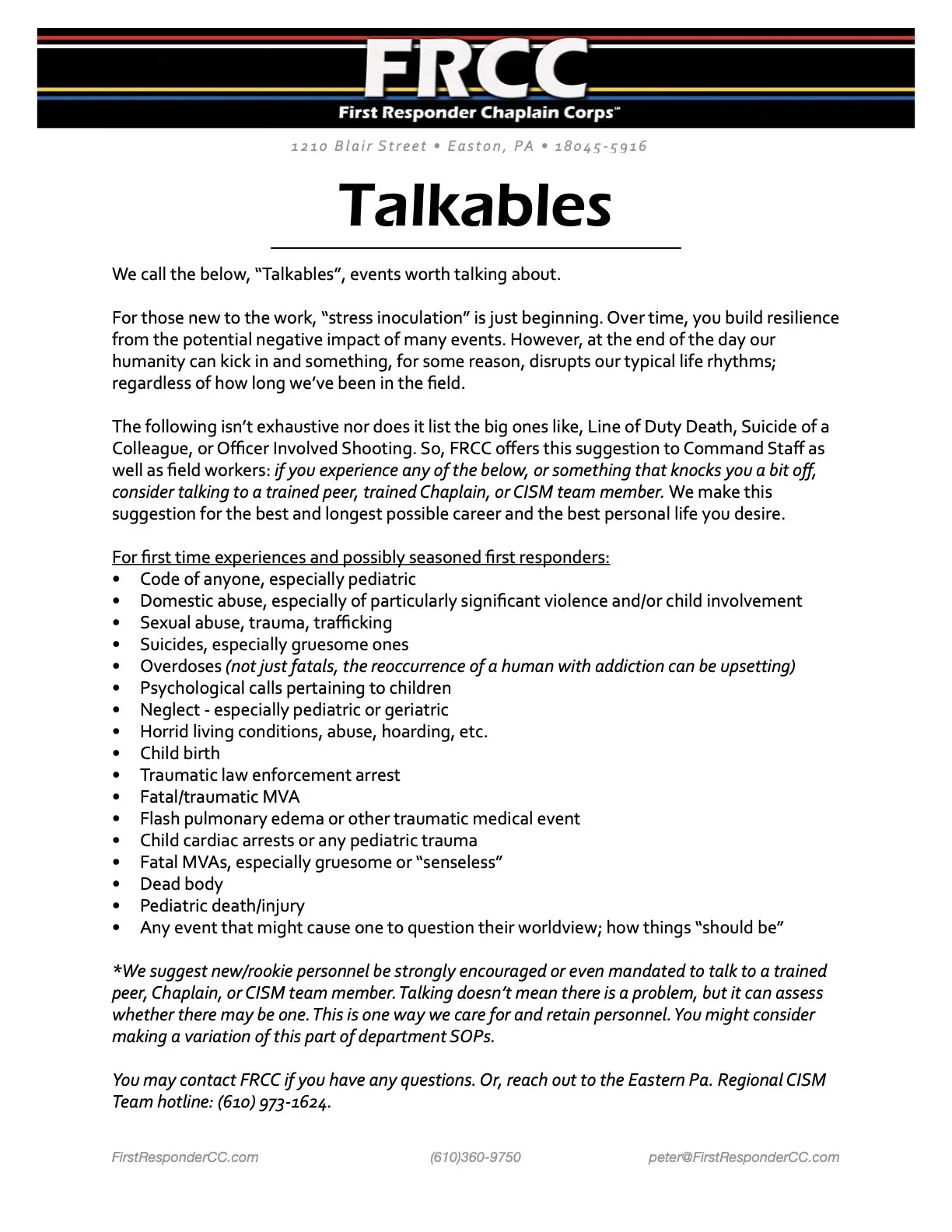
Talkables - They’re the things we don't want to talk about, but should. I’ve compiled an in-complete list - because any incident can throw us off our game - to consider. When these kinds of events occur, I encourage departments to have their involved personnel talk about them with trusted, trained and reliable people. That could be the department Chaplain, a CISM Team member, a Peer Support person, or other knowledgeable person. Feel free to download, copy, and distribute this as you like!
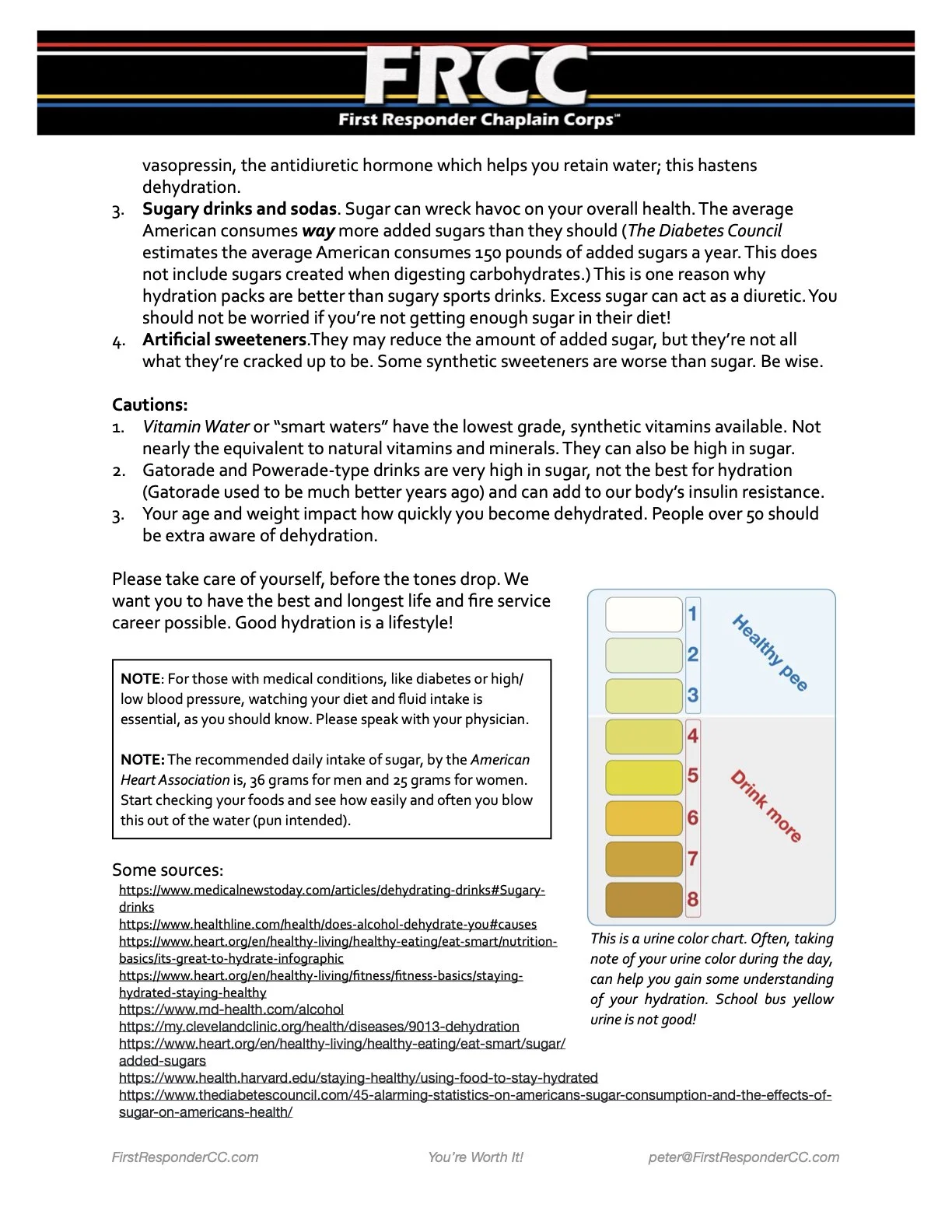
Hydration
First responders are called into disasters at a moments notice. Often, they can be bounced from one call to another without a proper meal or rest. Helping first responder develop a lifestyle of hydration is part of our role. Here are some valuable resources for you to best assist first responders, civilians, and yourself!
We’ve also put together an information graphic for Heat Exhaustion and Heat Stroke.
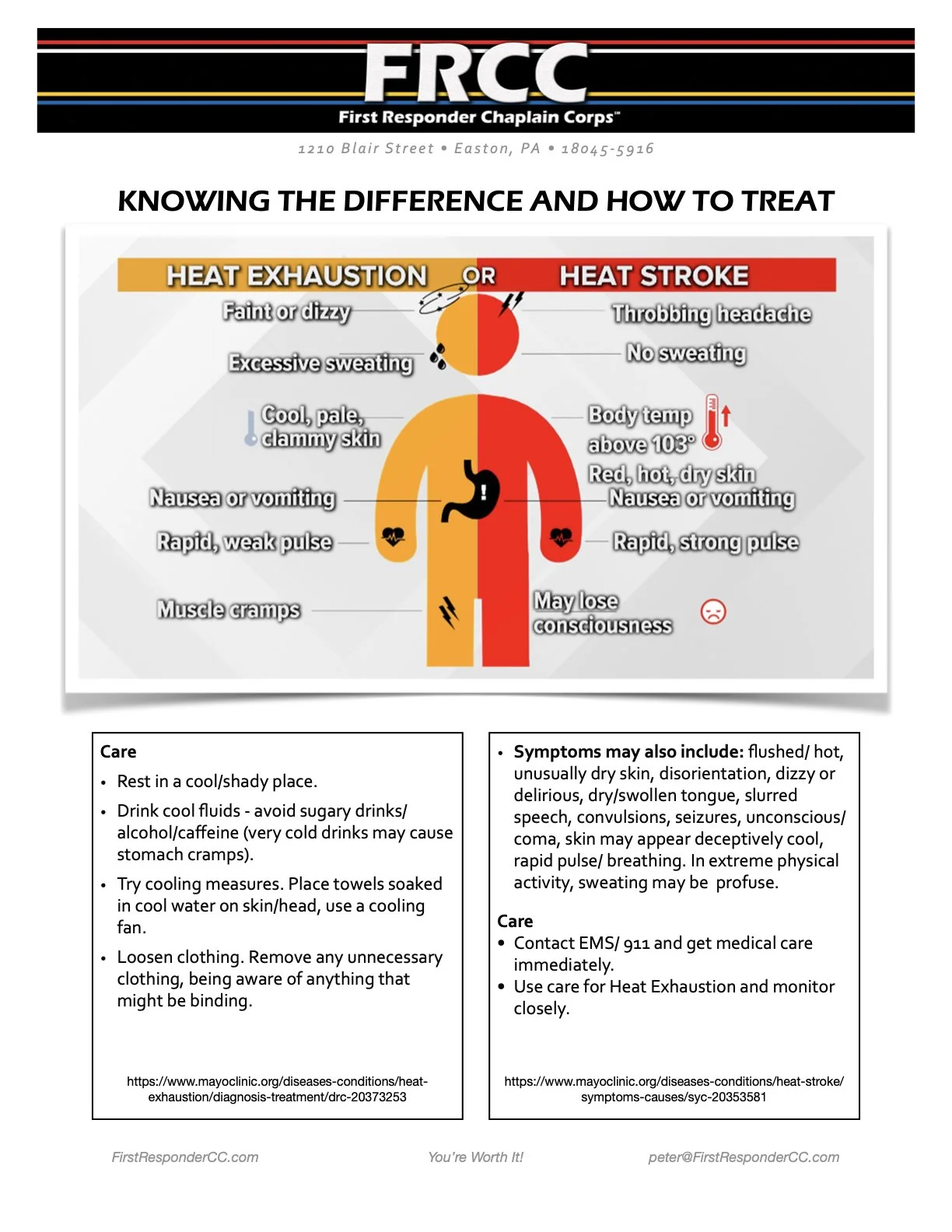
Heat Exhaustion/Stroke

“So You Want to Work with Fire Fighters…” An ICISF journal article I found excellent for a foundational understanding of first responder chaplaincy. If you’re currently in healthcare chaplaincy, or you are trying to get into first responder chaplaincy, please read this. In one of my first classes the instructor darkly told the class, “Hanging out with firefighters is rough, it isn’t for everyone.” Tender ears and an inflexible moral code doesn’t work well as a chaplain. You can’t be a prude, you won’t last very long. Give it a read!
PTSD In Emergency Services. We talk a lot about suicide among fire, police, EMS and dispatch personnel. There are TONS of organizations and phone hotlines. But the BEST bet in preventing a suicide is to be present! This is the niche of First Responder Chaplains! Check out this ICISF article.

The Substance Abuse and Mental Health Services Administration published an excellent supplement on first responder behavioral health conditions. If you do not have this resource, please download it by clicking on the image on the left. You will be taken to the document.
In here you’ll find valuable information on first responder substance abuse, post traumatic stress disorder, and suicide.
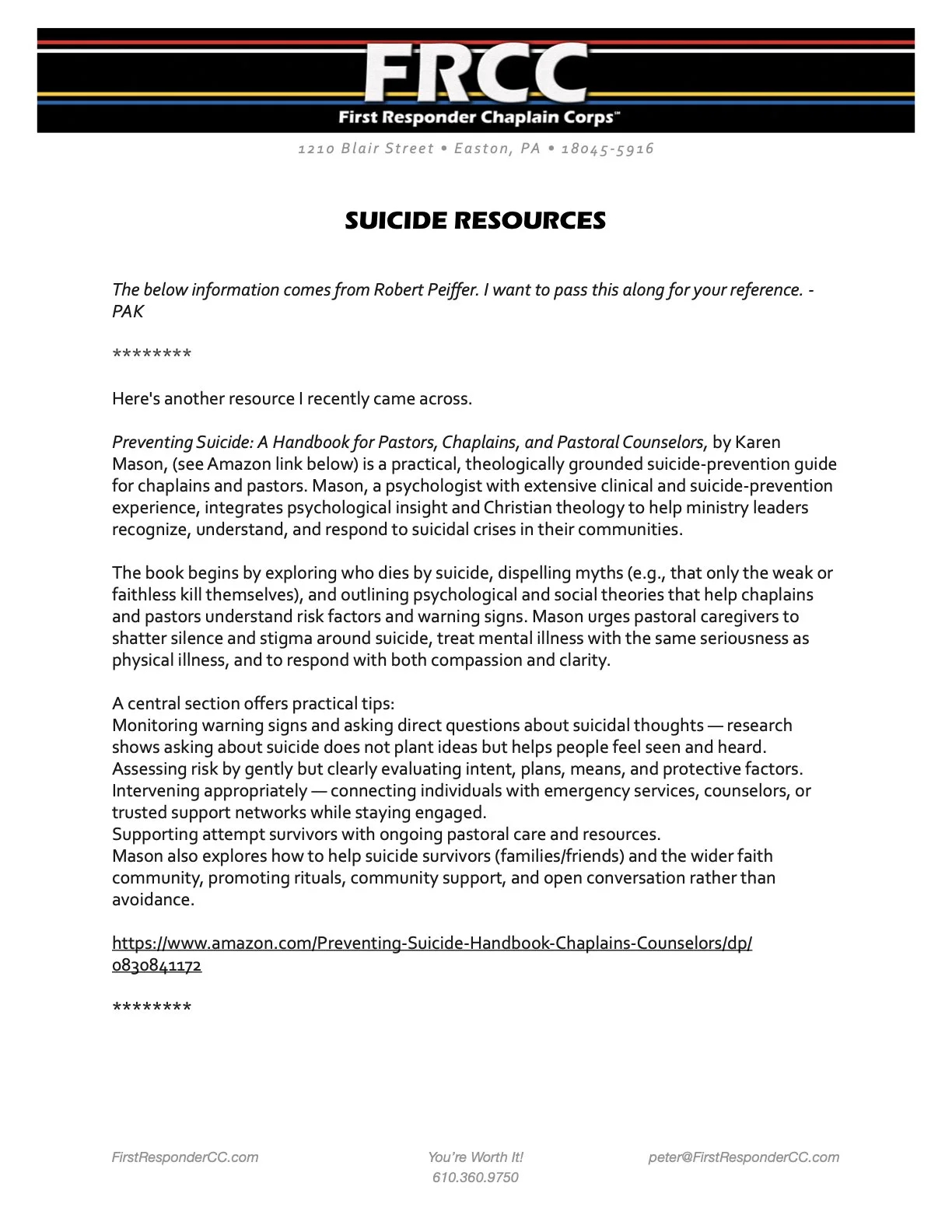
Suicide awareness and intervention is a skill chaplains absolutely must have if they’re to serve first responders well. The suicide rate - as well as ideation - is higher amongst first responders than the general population. Additionally, within the disciplines of fire, police, EMS, and dispatch, the rates vary with staggering significance. This resource was provided by a good friend, Bob Peiffer, and I want to make it known you you!
Critical incidents are inevitable in first responder work. And assisting first responder personnel though them takes specific training and skill. However, post traumatic stress has symptoms that everyone should be aware of, especially chaplains looking after their departments. If you don’t have a list of the most common stress responses, here ya go! Feel free to download, study, distribute and educate!

Post Traumatic Stress comes with all sorts of symptoms as well as changes in a persona behavior. Although this is not intended, nor should it be used to try to diagnose (PTSD is a formal diagnosis), being aware of some of the most common behavioral changes can help others get the assistance needed. It’s important for chaplains to be aware of these behaviors so you can properly care for personnel. It’s part of your training, use it well!
DEATH NOTIFICATIONS
Death Notifications. A very good colleague has put together an excellent piece on doing death notifications. I have Jeff’s permission to share this. So, please feel free to download the piece for your reference.
Here’s another piece on death notifications. It’s kind of a pop-quiz I put together to test you death notification IQ!
